
 By Cathy Gassenheimer
A new report, Looking Outside Education: What School Leaders Can Learn About Professional Learning from Other Industries, may spark some fresh thinking about the professional growth of America’s teachers among educators willing to consider the best practices found in business and industry.
 Last week, I reflected on four of eight strategic practices described in the report published by Learning Forward and the Center on Great Teachers and Leaders at the American Institutes for Research.
Here are my thoughts about the remaining best practices, which include: (5) Targeted training and support based on the employee’s specific role; (6) Emphasis and awareness of the role of context in learning and growth; (7) Mentoring; and one of my favorites (8) Intentional networking.
5. Targeted training and support based on the employee’s specific role
This section of the report begins quite poignantly:
“Every teacher likely has at least one story of a professional learning opportunity that was irrelevant to him or her because of context. For example, a physical education teacher is forced to sit through a professional development day focused on math pedagogy, or a teacher receives training on how to implement 1:1 initiatives though the school lacks the infrastructure and funding to make such an initiative successful.
“Leaders need to plan professional learning opportunities that are relevant to the role and context of the individual and recognize that, over time, as roles and contexts change, additional professional learning will be needed (p. 10).”
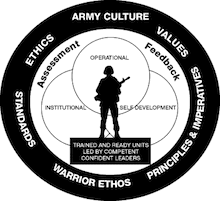 To address role and context, the report points to the U.S. Armed Services. The contrast between what the army does to induct soldiers into a new role as opposed to what most schools do with teachers is startling. Before getting a new assignment, soldiers receive training in the essential skills connected to that assignment, with opportunities to practice before assuming their duties. Once in the new position, the soldiers receive ongoing coaching and participate in a 360-assessment system.
Contrast that to the experiences of most teachers who, when they are moved to different grade level or asked to teach a different course, are seldom provided with any additional support.
6. Emphasis and awareness of the role of context in learning and growth
As many new teachers discover quite quickly, context matters. Within a school, subcultures often exist within grade-level or subject areas. Faculty or student make-up affects the culture, as do expectations from various stakeholders.
As student populations become more diverse, the context becomes even more important. As an example, the U.S. Armed Forces constantly assesses the current context in which members of the military are likely to operate and adjusts and plans professional learning needs accordingly. This reports suggests that districts and schools should do the same.
“Today’s students come to school with different backgrounds, resources, and needs than they did years ago. For the first time in 2014, the number of Latino, African-American, and Asian students in public K–12 classrooms surpassed the number of non-Hispanic whites in education (Maxwell, 2014). In addition, the majority of Americans own at least two digital devices, and more than 36 percent of Americans own a smartphone, computer, and tablet (Anderson, 2015).
“The context of the classroom—and the world surrounding it—is changing constantly. Therefore, education leaders need to consistently reevaluate whether the training and support provided continues to be relevant (p. 11).”
7. Mentoring
While the report emphasizes the importance of mentoring for all new employees, it pays particular attention to the importance in business of mentoring women and minorities. One could make the same case for education, particularly when looking at career advancement.
Five key insights emerged from business about mentoring, according to the report:
(1) Mentors need to understand their role and serve both as coach and counselor;
(2) Stereotypes and biases should be addressed head-on by the mentor;
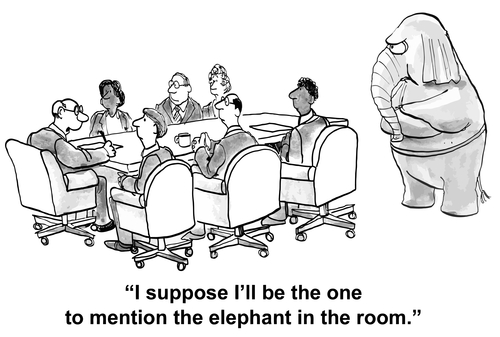
(3) Crucial conversations discussing uncomfortable ideas (a.k.a., the elephant in the room) should be part of the mentoring process;
(4) It is the role of the mentor to connect the mentee to a network of others who can be of assistance to the mentee;
(5) In addition to being a mentor, the person needs to become a sponsor.
“Moving beyond mentoring to sponsor means protecting and advocating for the mentee—making sure mentees are considered for growth opportunities and laying the groundwork to support successful promotions (p. 13).”
8. Intentional networking
The report titles this approach “Employee Resource Groups,” which are defined as “less structured professional learning opportunities (p. 14).” Certainly, this is where the ABPC networks come in. Our work is grounded in the firm belief that the knowledge is in the room and it is the role of designers/facilitators to tap that knowledge. Networking is key.
But, it doesn’t need to stop there. Recently, I saw a tweet about instructional partners (IPs) from Florence City Schools connecting with IPs from Enterprise City Schools via Google Hangout. to exchange ideas and talk through common challenges. Topics during the virtual session ranged from enrolling teachers in the coaching cycle, to facilitating instructional rounds, to building a positive culture for teaching and learning.

Unfortunately, this type of powerful networking seems to be the exception and not the rule. With Google Hangout, Skype and other platforms and social media apps, providing intentional networking opportunities for education can be an easy and powerful way to promote ongoing learning.
Knowing-Doing Gap…Again
As I finished reading the report, I wondered why the Knowing-Doing Gap is still so pervasive in education. With the possible exception of Deliberately Developmental Organizations (see Part 1 here), none of these suggestions are novel or new (although I’m thankful for all the work that went into coalescing these practices into a short, highly accessible report).
Much of what is suggested in Looking Outside Education doesn’t have to break the bank. I, for one, will cheer the day that districts stop paying the big bucks to bring in an inspirational speaker, instead of opting for the type of effective, ongoing, job-embedded professional learning described in this report.

