
 By Cathy Gassenheimer
In Part 1 of this blog about constructive dialogue, I highlighted my learnings from Jim Knight on the beliefs that undergird better conversations, drawing on his all-day workshop at the Learning Forward conference in early December as well as his new book Better Conversations: Coaching Ourselves and Each Other To Be More Credible, Caring, and Connected.
In this post, the focus shifts to building—or strengthening—habits that enable better conversations. “Changing our beliefs or habits involves two kinds of knowledge – explicit and tacit,” Knight tells us.
Explicit knowledge is knowledge we describe, discuss, and easily share—the knowledge described in checklists, manuals, how-to-guides, and books like this one. Tacit knowledge, in contrast, is knowledge we have but that we don’t know we have” (p. 11).
Reading those two sentences helped me deepen my understanding about explicit knowledge. But, to tell the truth, it didn’t give me much usable information about tacit knowledge. So I kept reading, hoping for clarification. Voila!
Tacit knowledge ‘is personal knowledge embedded in individual experience and involves intangible factors such as personal belief, perspective, and the values systems.’ (Knight quoting Nonaka & Takeuchi, 1995, p. viii).
In his Learning Forward workshop, Knight outlined 10 essential habits needed to master better conversations, and he spent the last half of his presentation helping us work through each one. (Attached to the end of this blog is a PDF of the workbook we used for this process. The first six pages relate to better conversation beliefs, which were outlined in my earlier post.)

Habits One and Two: Demonstrating and Listening With Empathy
Knight draws on the work of Roman Krznaric to explain empathy. According to Krznaric, “empathy withers and dies when we fail to acknowledge the humanity of other people—their individuality and uniqueness—and treat them as beings of less equal worth to ourselves” (Krznaric, Empathy: Why It Matters and How to Get It, p. 75).
To be empathic, Knight suggests that we first demonstrate empathy toward ourselves. We are usually our harshest critics, and I suspect you can remember countless times when you berated yourself about some action, thought, or idea.
 To fully understand empathy, Knight helped us look at its two components: affective empathy and cognitive empathy. Affective empathy is all about emotions and feelings. To authentically display empathy, we need to be mindful of the other person’s feelings and actually mirror them back. A simple example of affective empathy is when we become moved by a story someone tells or by a commercial, book, or movie. Of course, Knight invites us to move beyond this kind of passive response to a more active expression of affective empathy in which we experience the emotion of a person we are interacting with.
Cognitive empathy is perspective taking and calls upon us to step back and “identify our own needs and our conversation partners’ needs” (p. 49). To demonstrate cognitive empathy, Knight suggests 3.5 steps: (1) Commit to listening; (2) Be the listener, not the speaker, (3) Pause before your response to make sure you are opening up; (3.5) If you can’t do the first three, at least don’t interrupt the person speaking.
Habit Three: Fostering Dialogue
Knight calls on William Isaac’s definition of dialogue: “(A) way of taking the energy of our differences and channeling it toward something that has never been created before. It lifts us out of polarization and into a greater common sense, and is thereby a means for accessing the intelligence and coordinated power of groups of people.” (Isaacs, Dialogue and the Art of Thinking Together, 1999, p. 19).
Those of you who are involved in our work are quite familiar with dialogue, so I won’t belabor the point beyond a few key insights. To have a successful dialogue several behaviors need to be in place, including empathy, being humble, balancing advocacy with inquiry, suspending judgment, and voicing.
Habit Four: Asking Better Questions
My facilitation partner Jackie Walsh could certainly write more eloquently that I can when it comes to asking a better question. (We’ll have a blog post by Jackie in the next few weeks based on her new ASCD book, Questioning for Classroom Discussion.)
To improve questioning, Knight reminds us of several important habits: being curious, asking open-ended opinion questions, being nonjudgmental, and recognizing that the more we practice asking better questions, the better questioners we will become.
Habit Five: Making Emotion Connections
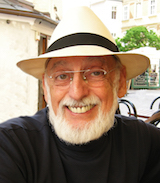 Knight draws heavily on the work of John Gottman to explain making emotional connections. Gottman (right), a noted expert on relationships, believes that “Whether people are struggling to save a marriage, to cooperate in a family crisis, or to build rapport with a difficult boss, they usually have one thing in common. They need to share emotional information that can help them feel connected” (Gottman & deClair, The Relationship Cure, 1999, p. 3).
Gottman tells us that emotional connections can be made or thwarted by the way we respond to others, and he offers the possible responses:
A bid is when someone reaches out to you. It may be nonverbal—a smile, a nod, or a wave. Or, the bid may be made by a statement or question. The key message behind the bid is an invitation to being connected.
Once a bid is made, the “receiver” of the bid has two options. The first is to turn towards the bidder, again either nonverbally or verbally. The second respond is to turn away or ignore the bid. Oftentimes, we inadvertently turn away from a bid simply because we don’t see it or realize it for what it is.
Unfortunately, we also sometimes intentionally turn away from a bid because we are too busy, too distracted (think electronics), or we simply don’t want to engage at that time. Turning away from a bid—whether intentional or not—according to Gottman, can be devastating. “When somebody turns away from a bid, the bidder loses confidence and self-esteem…people almost seem to ‘crumble’ when their partners turn away The bidders don’t get puffed up with anger; they don’t get indignant; they just seem to fold in on themselves.” (p. 47)
The most negative form of turning away is intentionally and toxically refusing to engage. An example given by Knight that relates to instructional partners is a scenario where the IP asks a teacher if he/she wants to collaborate. A response like, “What in the world would I learn from you,” is a classic example of turning away.
The third and final installment of my learnings from Jim Knight at Learning Forward (and in his new book) will follow in a few days. Stay tuned when you’ll learn more about the final five habits.
You’ll find more resources about all of the 10 Habits at Corwin’s companion website for Better Conversations. Click on the different chapters to see worksheets involving the habits. Some of these were shared in a workbook Jim Knight used during our day-long workshop.

