

 By Cathy Gassenheimer
“If students of poverty are different, whose job is it to do the adjusting?”
Eric Jensen asks his readers this tough question at the end of his new book, Poor Students, Rich Teaching: Mindsets for Change (Solution Tree, 2016).
While Jensen holds this question until the very end of the book, his point of view is clear from the very beginning. Jensen suggests all teachers, particularly those who work with large numbers of students living in poverty, must believe they have the ability to successfully teach every student:
“In teaching, you have to believe that every single student (100 percent of your students with no exceptions) can improve a great deal and that you’re willing and able to make it happen. You have to believe that you are the biggest difference maker in each student’s life. You have to believe that no matter what else is going on in that learner’s life, once class starts, you can make the magic happen.
“You have to believe you can connect, inspire, and energize every student. If there’s just one molecule of doubt in your mind, students will sniff it out and lose faith because they know you don’t have faith in them either.” (p. 17)
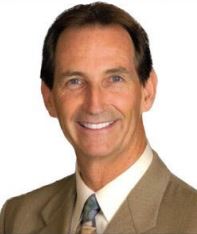 Jensen’s message it clear: It is up to educators to change the destiny of their high poverty students. He speaks both with authority and from experience. Jensen grew up in an incredibly dysfunctional home. At age two, his mother walked out and he was left to the care of “neglectful caregivers” until his father remarried when he was six.
His new stepmother was “violent, alcoholic, and abusive…[Jensen] never went into the kitchen when she was there because that’s where the knives were (p. ix).” Jensen struggled through school, was arrested twice, and barely graduated from high school. He got his life together in adulthood, became a teacher and is now on a mission.
More about Poor Students, Rich Teaching
While he sets a very high bar for teachers, he accompanies those expectations with a plethora of tools, advice, and research. The book is augmented with a resources page on the publisher’s website.
Acknowledging that teaching is hard work and requires most educators to change their mindset, Jensen reminds us “students can change if teachers change first (p. 179).” And that’s what this book is all about: How and what teachers need to do to successfully reach all of their students.
The book is organized into four parts:
- The Relational Mindset
- Why the Achievement Mindset?
- Why the Rich Classroom Mindset?
- Why the Engagement Mindset?
Part I, “Why the Relationship Mindset?” encapsulates five chapters that define and explain the relationship mindset, suggest ways to personalize the learning for every student, and advocate for making connections with every student.
In each section, he presents compelling mindset options. The choices posed in Part 1 ask us to consider these two mindsets:
Mindset One: “Parents, schools, policies, and laws are all changing. Why can’t things be like they used to be?”
Mindset Two: “Change is a constant, especially in education, and it’s only going to accelerate. I will grow and change myself.”
Tips in this section range from strategies for remembering students’ names at the first of the year, to making connections with each and every student, and using “empathy tools.”
The Achievement Mindset includes “gutsy goals”
Part II, “Why the Achievement Mindset?” is organized into six chapters. Defining the achievement mindset, setting “gutsy goals,” holding and maintaining the right attitude, providing “fabulous feedback,” and persisting with determination are the major themes.
 Once again, Jensen reminds us of the importance of a teacher’s mindset:
“Thousand of U.S. teachers complain that their students lack effort. At the same time, it is a simple fact: a student who appears lazy or unmotivated for one teacher will often work hard for another teacher.
“This simple fact shows us that the student is different with a different teacher. It is the teaching that makes the difference, and the achievement mindset changes everything.” (p. 60)
Throughout this section, Jensen draws heavily on the research of Carol Dweck (growth mindset), Dylan Wiliam (formative assessment), and John Hattie (meta-analysis on what teaching strategies are most effective).
Again, a lot of helpful advice and suggestions are embedded in this section including: helping students set goals and micro-goals to celebrate progress, providing specific feedback to students, adjusting instruction based on that feedback, and developing grit and persistence.
The mindset question for Part 2 is:
Mindset One: “It’s not my fault. Parents should motivate their own kids, not me.”
Mindset Two: “The achievement mindset says, ‘I can build student effort, motivation, and attitudes to succeed. They are teachable skills.’” (p. 104)
Throughout the book, Jensen challenges us to engage students every minute of the day and then provides strategies and tools to make that possible.
In my second post about Poor Students, Rich Teaching: Mindsets for Change, I summarize Jensen’s ideas about creating rich classrooms and making student engagement a constant priority.

