
 By Cathy Gassenheimer
Movie and television directors use it; advertising agencies use it; and now teachers in Japan, and a growing number of teachers in America, are using it too. What’s the “it?”
It’s a storyline. For educators, it captures a lesson from beginning to end in a way that is compelling, clear, and provides both students and their teacher(s) with lots of feedback.
For years, I had heard about lesson study as a key practice in Japan. I watched some of the videos that TIMSS researchers Jim Stigler and James Hiebert recorded of teaching in various countries, including Japan, Germany, and the U.S.
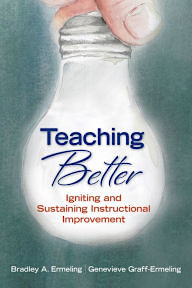 But I didn’t discover the concept of a lesson storyline until I picked up a new book titled Teaching Better: Igniting and Sustaining Instructional Improvement, by Brad Ermeling and Genevieve Graff-Ermeling.
The storyline begins with teachers working together to identify what they want the students to know and be able to do at the end of the lesson. This backwards design process becomes quite elaborate as teachers map out a design that is transferred to the chalkboard (most Japanese classrooms still use chalkboards).
In addition to mapping out the lesson, the storyline also “provides a record of problems, solution approaches, and key principles over the course of a lesson (p. 16).” This enables students to see the entire lesson, options for learning, and it can help them trouble-shoot in the case of confusion or misunderstanding.
Want to see this in action online?
You can see an example of a teacher using a storyline in this TIMSS video “JPS3 Solving Inequalities” which includes closed captioning and a transcript, both in English.
In this video, you’ll not only see the storyline in action, but you’ll also see the Japanese teacher constantly checking the understanding of more than 30 eighth grade students as he challenges them to think more deeply by developing alternative solutions.
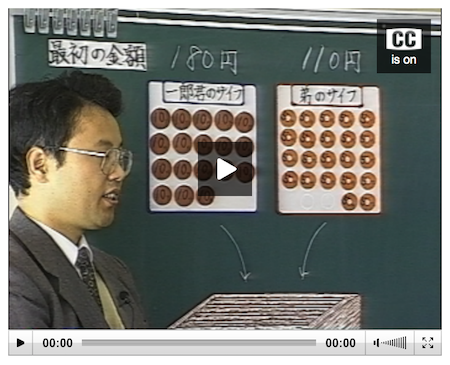
With his clipboard, the teacher notes different strategies used by different students and calls on those students to share their solution and the rationale behind it. All the while, he is weaving a storyline that the students can follow, about two boys who are going to a temple each day to pray for their mother, who is in the hospital.
(from the transcript)
Okay. It has been one month since Ichiro’s mother has entered the hospital.
He has decided say a prayer with his smaller brother at a local temple every morning so that she will be well soon.
There are 18 10-yen coins in Ichiro’s wallet and just 22 five-yen coins in his smaller brother’s wallet.
They have decided every time to take one coin from each of them, and put them in the offertory box, and continue their prayers until either wallet becomes empty.
One day after they were done with their prayers, when they looked into each other’s wallets, the smaller brother’s amount of money was greater than Ichiro’s.
How many days has it been since they started praying? That’s the problem.
As the teacher continues with the inequalities lesson, introducing concepts, inviting feedback and engaging students in considering the “ideas in the room,” he reconnects with the boys’ story from time to time, helping them also visualize the math in a real-world setting. In total, the lesson is a narrative woven around a puzzle and driven by students’ emerging understanding. The direct instruction is subtle and strategic.
Seven portraits of teaching and learning
For me, the powerful potential of “storyline teaching” was the hook that drew me into Teaching Better. But the Ermelings offer so much more. The authors spent seven years teaching and learning in Japan. Heavily influenced by the everyday culture of teacher collaboration, and key concepts they learned, the authors organized the book into seven “portraits.”
The seven portraits are:
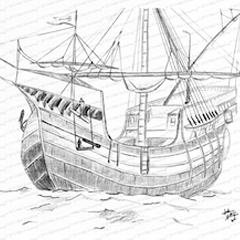
- Rotting Ship at Sea
- Rich Drop of Food Coloring
- Japanese Toothpick
- Visual Treasure Chest
- Winter Horseshoes
- Joint Productive Activity
- 5000 Reasons to Quit
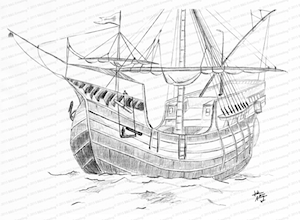 Are you intrigued? Are you trying to figure out what in the world a rotting ship at sea has to do with education? You can check out the portraits, which were drawn by students, and read the description of each, by clicking here.
This book connects in so many ways to a chief focus of our networks: student engaged assessment.
► By identifying clear, student-friendly learning targets shared at the beginning of the lesson and revisited throughout, students understand what they are expected to learn.
► By creating engaging lessons that are connected to the real world, students are more inclined to learn.
► By encouraging students to think and at times struggle to deepen their understanding, they become more persistent and more able to deal effectively with our ever-changing world.
► And, by constantly gathering feedback during the lesson, teachers are able to adjust instruction and students are better able to identify their learning gaps and address them.
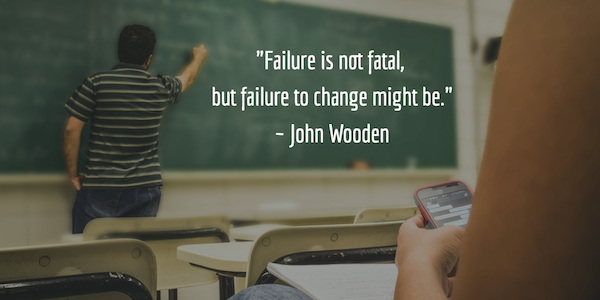
Throughout the book, short case studies are offered that helps the ideas to come to life. And I found the ending to be encouraging and heartening as the authors captured the journey of four teachers. They even mention UCLA’s legendary coach John Wooden and his belief that always working to improve his teaching was the real key to his success.
Learning more about storylines and lesson study
So, as you are thinking about the approaching school year, you might consider the idea of a storyline and how it can help your colleagues, yourself, and your students teach and learn at higher levels. So what do you think? Are you intrigued?
You might want to read this recent Education Week article by the Ermelings: Using Japanese ‘Lesson Study’ to Increase Collaboration Among Teachers. It includes a link to another Ermelings article in Educational Leadership: “Teaching Between Desks.”
You might also be intrigued by Brad Ermeling’s commentary on how Japanese teachers use the traditional chalkboard to plan and manage their teaching storylines. They call it bansho-keikaku (boardwriting planning). Will it work with tech integration?

